 English▼



Situs Blog
Blog terbaru
Blog Kategori
Hubungi kami
- Jika Anda memiliki pertanyaan, silahkan hubungi kami, Semua pertanyaan akan dijawab
- Email : David@tmaxcn.com
- Email : Davidtmaxcn@gmail.com
- Tambahkan : No. 39, Xinchang Road, Xinyang, Haicang Dist., Xiamen, Fujian, China (Mainland)
Hot produk
blog
Temperature Chamber
July 7,2026.
Xiamen Tmax Battery Equipments Limited was set up as a manufacturer in 1995, dealing with lithium battery equipments, technology, etc. We have total manufacturing facilities of around 200000 square foot and more than 230 staff. Owning a group of experie-nced engineers and staffs, we can bring you not only reliable products and technology, but also excellent services and real value you will expect and enjoy.
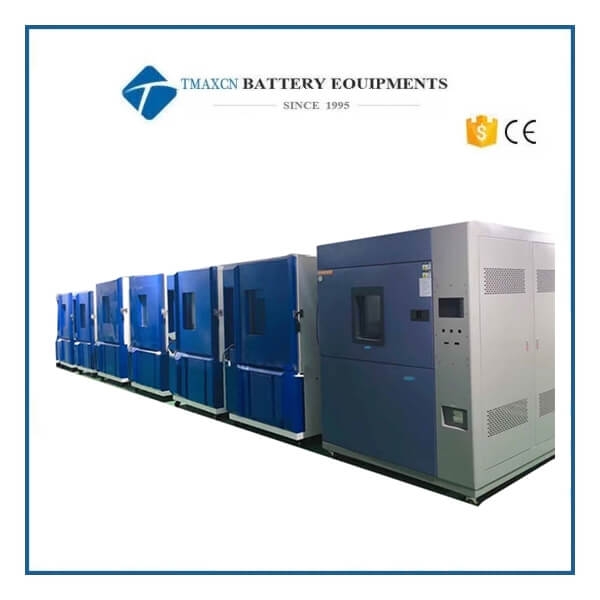
A temperature chamber, also known as a climate chamber or environmental test chamber, is a device used to simulate specific environmental conditions such as temperature, humidity, pressure, and sometimes vibration. These chambers are essential for testing the performance, reliability, and durability of products under controlled conditions that mimic realworld environments.
In this article, we will explore the definition, types, applications, advantages, and limitations of temperature chambers.
●What Is a Temperature Chamber?
A temperature chamber is an enclosed space where the internal environment can be precisely controlled to replicate various temperature and humidity conditions. It allows manufacturers and researchers to evaluate how materials, components, or systems perform under extreme or fluctuating temperatures. This ensures product quality, safety, and compliance with industry standards.
●Key Components of a Temperature Chamber
1. Insulated Walls
Prevent heat exchange between the chamber's interior and exterior.
2. Heating and Cooling Systems
Use resistive heaters, refrigeration units, or Peltier devices to regulate temperature.
3. Humidity Control System
Adds or removes moisture from the air to achieve desired humidity levels.
4. Air Circulation Fans
Ensure uniform distribution of temperature and humidity throughout the chamber.
5. Control Panel
Allows users to set and monitor parameters such as temperature, humidity, and time.
6. Safety Features
Includes overtemperature protection, alarms, and emergency shutdown mechanisms.
●Types of Temperature Chambers
1. Thermal Chambers
Focus solely on controlling temperature, ranging from cryogenic (80°C) to hightemperature (+300°C) extremes.
2. Humidity Chambers
Combine temperature control with humidity regulation, typically ranging from 10% to 98% relative humidity.
3. Environmental Test Chambers
Simulate multiple factors, including temperature, humidity, vibration, and altitude, for comprehensive testing.
4. WalkIn Chambers
Largescale chambers designed for testing fullsized equipment or vehicles.
5. ReachIn Chambers
Compact chambers suitable for smaller samples or components.
6. Salt Spray Chambers
Used to test corrosion resistance by simulating salty, humid conditions.
7. Cryogenic Chambers
Specialized chambers capable of reaching extremely low temperatures (down to 196°C).
●Applications of Temperature Chambers
1. Automotive Industry
Testing vehicle components, batteries, and electronics under extreme weather conditions.
2. Electronics
Evaluating the performance and reliability of circuits, semiconductors, and devices at varying temperatures.
3. Pharmaceuticals
Assessing drug stability and shelf life under controlled temperature and humidity conditions.
4. Food and Beverage
Studying the effects of storage conditions on perishable goods.
5. Aerospace
Simulating highaltitude and spacelike environments for aircraft parts and satellite components.
6. Medical Devices
Ensuring the functionality and safety of medical equipment under diverse conditions.
7. Materials Science
Investigating the thermal properties and structural integrity of metals, plastics, and composites.
8. Renewable Energy
Testing solar panels, wind turbines, and energy storage systems in simulated outdoor environments.
●Advantages of Temperature Chambers
1. Precise Control
Enables accurate replication of specific environmental conditions.
2. Repeatability
Provides consistent results across multiple tests, ensuring reliable data.
3. Safety
Conducts tests in a controlled environment, minimizing risks to personnel and equipment.
4. CostEffectiveness
Identifies design flaws or material weaknesses early in the development process, reducing longterm costs.
5. Versatility
Suitable for a wide range of industries and applications.
6. Compliance Testing
Helps meet regulatory requirements and industry standards.
1. Initial Cost
Highquality chambers can be expensive to purchase and maintain.
2. Energy Consumption
Requires significant power to maintain precise temperature and humidity levels.
3. Size Constraints
Larger items may require specialized walkin chambers, which are more costly and less portable.
4. Maintenance Needs
Regular calibration and servicing are necessary to ensure accuracy and reliability.
5. Limited Realism
While chambers simulate conditions, they may not fully replicate all realworld variables.
●Factors to Consider When Choosing a Temperature Chamber
1. Temperature Range
Select a chamber that covers the required temperature extremes for your application.
2. Humidity Control
Determine if humidity regulation is necessary for your tests.
3. Chamber Size
Choose a chamber that accommodates your largest sample while maintaining uniform conditions.
4. Precision Requirements
Specify the level of accuracy and repeatability needed for your tests.
5. Budget
Balance cost considerations with performance needs.
6. Certifications
Ensure the chamber meets relevant industry standards and regulations.
●Examples of Temperature Chamber Manufacturers and Pricing
| Manufacturer | Type | Price Range (USD) |
||||
| ESPEC Corp. | Environmental test chambers | $10,000 – $100,000+ |
| Thermo Fisher Scientific| Reachin chambers | $5,000 – $50,000 |
| WEISS Technik | Walkin chambers | $50,000 – $200,000+ |
| Angelantoni Life Science| Pharmaceutical chambers | $15,000 – $75,000 |
●Tips for Maximizing Temperature Chamber Performance
1. Calibration
Regularly calibrate sensors and controls to ensure accuracy.
2. Preconditioning Samples
Allow samples to stabilize before starting tests for consistent results.
3. Optimize Airflow
Ensure proper placement of samples to avoid obstructing airflow.
4. Monitor Parameters
Continuously track temperature, humidity, and other variables during tests.
5. Routine Maintenance
Clean filters, check seals, and inspect components regularly to prevent malfunctions.
●Future Trends in Temperature Chamber Technology
1. Smart Chambers
Equipped with IoT sensors and AIdriven analytics for realtime monitoring and predictive maintenance.
2. Energy Efficiency
Advances in insulation and cooling technologies reduce power consumption.
3. Customizable Solutions
Tailored designs for niche applications, such as quantum computing or biotechnology.
4. Integration with Automation
Seamless integration with robotic systems for automated testing processes.
5. Sustainability
Ecofriendly designs using recyclable materials and renewable energy sources.
●Conclusion
Temperature chambers play a critical role in ensuring product quality, reliability, and safety across various industries. Their ability to simulate diverse environmental conditions makes them indispensable tools for research, development, and quality assurance. While there are challenges associated with cost and complexity, ongoing advancements continue to enhance their capabilities and accessibility.
What aspects of temperature chambers interest you most? Share your thoughts below! Together, let’s explore how these powerful tools can drive innovation and improve product performance.
 +86 13174506016
 David@tmaxcn.com

