 English▼



Situs Blog
Produksi Baterai Mobil - Panduan Alur Proses & Peralatan Turnkey
Produsen Peralatan Baterai Mobil Listrik untuk Pack EV, E-Bike & Penyimpanan Energi
Hubungi kami
- Jika Anda memiliki pertanyaan, silahkan hubungi kami, Semua pertanyaan akan dijawab
- Email : David@tmaxcn.com
- Email : Davidtmaxcn@gmail.com
- Tambahkan : No. 39, Xinchang Road, Xinyang, Haicang Dist., Xiamen, Fujian, China (Mainland)
Hot produk
blog
Production of Batteries for Electric Cars - Process Guide
EV pack manufacturing teams often struggle with inconsistent cell sorting, weld defects, and integration bottlenecks that cause costly delays on the factory floor. Setting up a reliable prismatic module line requires clear synchronization between mechanical handling, precision joining, and real-time electrical testing. This practical guide breaks down the core machinery and process parameters required to achieve steady throughput and high pack yields. By addressing critical steps from initial sorting to end of line validation, engineers and procurement managers can better evaluate machinery investments and build stable production workflows.
Incoming Inspection and Cell Matching
A successful manufacturing run begins with strict cell grading. Prismatic cells arriving from suppliers show small variations in open-circuit voltage and internal resistance. High-speed sorting stations measure these values to group cells into matched sets. This balance prevents thermal drift and uneven degradation during driving cycles.
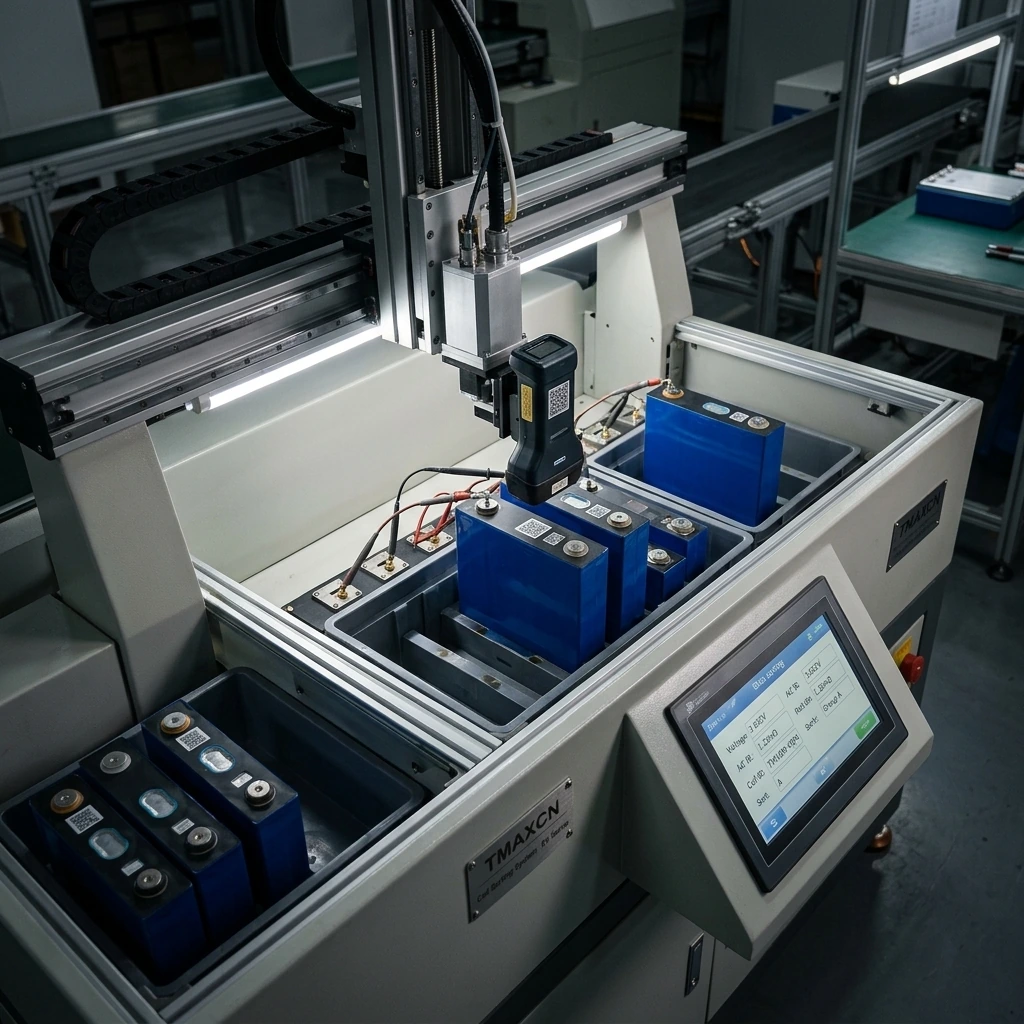
After sorting, automated insulation application stations place protective film on cell bodies to prevent inter-cell short circuits. Precise cell stacking follows, where dedicated equipment fixtures compress the cells under controlled force before structural side plates are secured.
Precision Busbar Joining and BMS Integration
Joining heavy current-carrying terminals represents the most critical mechanical stage. Fiber laser welding systems connect nickel or copper busbars across prismatic terminals. Consistent penetration depth avoids damaging the cell internal seal while ensuring minimal contact resistance.
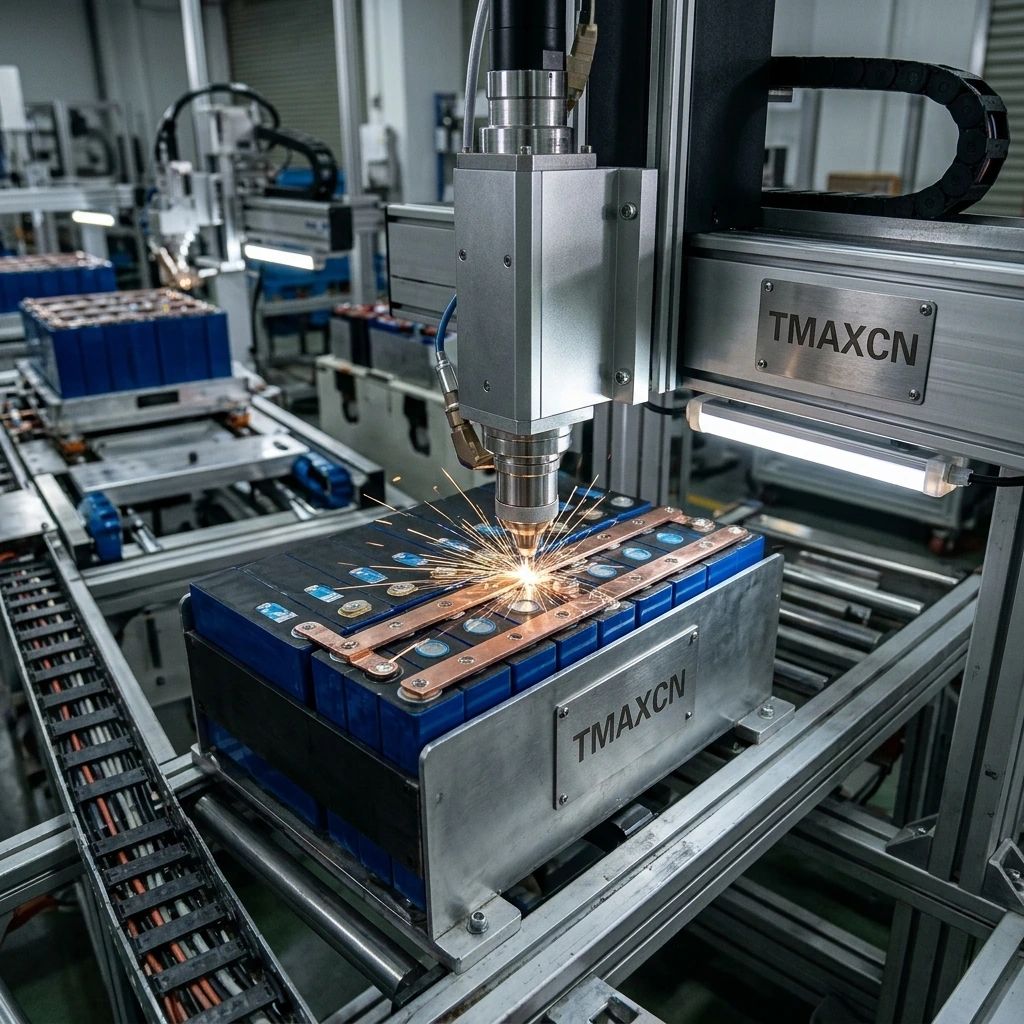
Once the module structure is mechanically sound, operators install the battery management system harness, temperature sensors, and high-voltage contactors. Engineers configure high-accuracy to verify signal continuity and insulation integrity before the modules enter outer metal enclosures.
End of Line Quality and Cycle Validation
Enclosed packs pass through automated tightening stations to secure liquid cooling plates and seal outer covers. Leak detection rigs pressurize the cooling channels to prevent future coolant leakage.
Final electrical assessment uses comprehensive cycling cabinets. Stations charge and discharge the pack across standard drive cycle profiles, validating thermal response, BMS communication, and full system capacity. Selecting an integrated ensures that testing records link directly to assembly stations for complete traceability.
FAQ
How adaptable is this assembly line for different prismatic cell heights?
The tooling uses quick-change clamping fixtures and programmable servo axes that accommodate multiple prismatic cell sizes with minimal changeover time.
What certifications apply to this battery pack machinery?
The complete system carries standard CE certification, and all electrical cabinets follow international industrial wiring safety standards.
What is the typical equipment lead time from order confirmation?
Standard semi-automatic lines ship directly from Xiamen within eight to twelve weeks, depending on custom conveyor and welding configurations.
 +86 13174506016
 David@tmaxcn.com


