 English▼



Situs Blog
Blog terbaru
Blog Kategori
Hubungi kami
- Jika Anda memiliki pertanyaan, silahkan hubungi kami, Semua pertanyaan akan dijawab
- Email : David@tmaxcn.com
- Email : Davidtmaxcn@gmail.com
- Tambahkan : No. 39, Xinchang Road, Xinyang, Haicang Dist., Xiamen, Fujian, China (Mainland)
Hot produk
blog
Bar Coater
January 20,2026.
Xiamen Tmax Battery Equipments Limited was set up as a manufacturer in 1995, dealing with lithium battery equipments, technology, etc. We have total manufacturing facilities of around 200000 square foot and more than 230 staff. Owning a group of experie-nced engineers and staffs, we can bring you not only reliable products and technology, but also excellent services and real value you will expect and enjoy.
Bar Coater: A Key Tool in ThinFilm and Coating Applications
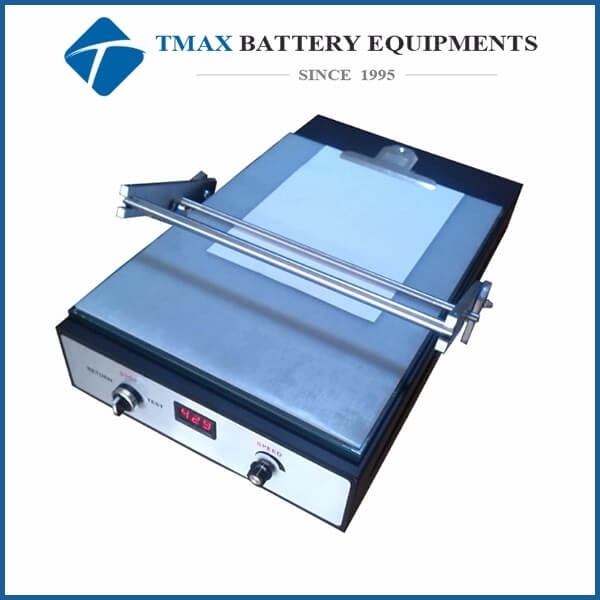
A bar coater is a device used to apply uniform coatings onto flat substrates, such as glass, plastic films, or metal sheets. It is widely employed in industries like electronics, solar energy, pharmaceuticals, and packaging to create thin, even layers of materials such as paints, adhesives, polymers, and functional coatings. The bar coater's simplicity, precision, and versatility make it an essential tool for both laboratory research and industrial production.
In this article, we will explore the principles, design, applications, advantages, challenges, and innovations associated with bar coaters.
●Principles of Operation
1. Mechanism
A bar coater consists of a precisionengineered coating bar (often made of stainless steel) with grooves or wires on its surface.
The substrate is placed on a flat platform, and a layer of liquid coating material is applied to its surface.
The coating bar is then drawn across the substrate at a controlled speed, leaving behind a uniform layer of the coating material.
2. Key Components
Coating Bar: Determines the thickness and texture of the applied coating. Bars can have different designs, such as wirewound bars or engraved grooves, depending on the desired coating properties.
Substrate Holder: Ensures the substrate remains flat and stable during the coating process.
Coating Reservoir: Holds the liquid material before application.
Speed Control Mechanism: Regulates the speed at which the bar moves across the substrate, affecting coating thickness and uniformity.
●Types of Bar Coaters
1. Manual Bar Coaters
Operated by hand, ideal for smallscale applications or laboratory experiments.
Simple and costeffective but may require more skill to achieve consistent results.
2. Automatic Bar Coaters
Equipped with motorized systems for precise control over speed, pressure, and consistency.
Suitable for largescale production environments where uniformity and repeatability are critical.
3. WireWound Rod Coaters
Use rods with wire wound around them to control coating thickness.
Commonly used in industries requiring precise film thicknesses.
4. Gravure Bar Coaters
Feature engraved patterns on the coating bar to deposit specific amounts of material.
Ideal for creating textured or patterned coatings.
●Advantages of Bar Coaters
1. Precision
Capable of producing highly uniform coatings with minimal variation in thickness.
2. Versatility
Compatible with a wide range of materials, including liquids, pastes, and suspensions.
3. CostEffectiveness
Relatively inexpensive compared to other coating methods, especially for smallscale operations.
4. Ease of Use
Simple setup and operation, making them accessible for both beginners and experienced users.
5. Scalability
Available in various sizes, from labscale models to industrialgrade machines.
●Challenges in Using Bar Coaters
1. Material Compatibility
Some materials may not adhere well to the substrate or may clog the coating bar, requiring adjustments or cleaning.
2. Edge Effects
Coatings may be uneven near the edges of the substrate due to the physical limitations of the bar.
3. Drying and Curing
Proper drying or curing conditions are necessary to ensure the quality of the applied coating.
4. Maintenance
Regular cleaning and calibration of the coating bar are required to maintain performance.
5. Operator Skill
Manual bar coaters demand skill and experience to achieve consistent results.
●Applications of Bar Coaters
Bar coaters are utilized across various industries for diverse applications:
1. Electronics
Applying conductive inks, dielectric materials, and protective coatings to printed circuit boards (PCBs) and flexible electronics.
2. Solar Energy
Depositing photovoltaic materials onto solar panels for efficient energy conversion.
3. Pharmaceuticals
Coating tablets with protective or functional layers to enhance drug stability and delivery.
4. Packaging
Applying adhesives, sealants, and barrier coatings to improve package durability and functionality.
5. Automotive
Creating antiglare, hydrophobic, or decorative coatings on vehicle components.
6. Textiles
Adding waterresistant, flameretardant, or antimicrobial coatings to fabrics.
7. Research and Development
Testing new materials and formulations in laboratory settings.
●Innovations in Bar Coater Technology
To address the challenges and enhance performance, manufacturers are developing advanced bar coater solutions:
1. Smart Coating Systems
Incorporating sensors and realtime monitoring to optimize coating parameters and detect defects.
2. Advanced Materials
Using wearresistant and corrosionresistant materials for longerlasting coating bars.
3. Automation
Integrating robotics and programmable controls for faster and more accurate coating processes.
4. EcoFriendly Solutions
Designing bar coaters that minimize waste and reduce environmental impact.
5. Customizable Designs
Offering tailored solutions for specific materials, substrates, and coating requirements.
●The Future of Bar Coater Technology
As coating demands continue to evolve, so too will the technology behind bar coaters. Key trends shaping the future include:
1. Increased Precision
Development of ultrafine coating bars for nanoscale applications.
2. Focus on Sustainability
Energyefficient designs and ecofriendly materials to minimize environmental impact.
3. Integration with Emerging Technologies
Combining bar coaters with AI, IoT, and cloud computing for smarter diagnostics and analysis.
4. Global Standards Compliance
Ensuring compatibility with evolving international regulations for coating processes.
5. Expansion into New Industries
Adapting bar coaters for emerging fields like biotechnology, aerospace, and quantum computing.
●Conclusion
Bar coaters are a versatile and reliable tool for applying uniform coatings across a wide range of industries. Their ability to produce precise and consistent layers makes them indispensable in modern manufacturing processes.
What excites you most about the advancements in bar coater technology? Share your thoughts below! Together, let’s explore how these innovative tools can shape the future of thinfilm and coating applications.
 +86 13174506016
 David@tmaxcn.com

